


The Dessert Menu at Queb Rooftop: A Guide to Turkish Sweets
In most cuisines dessert is an afterthought — the thing you order if there is still room. In Turkey it is a category of its own, with its own shops, its own vocabulary and its own rules about temperature and timing. A Turkish dessert is rarely just sweet: it is hot when you expect cold, salty where you expect sugar, and often built around cheese, semolina or clotted cream rather than chocolate.
At Queb Rooftop, our terrace on top of the Byzantium Hotel in Sultanahmet, the dessert course usually arrives after the plates have been cleared, the coffee has been ordered and nobody has any intention of leaving. This guide walks through what is on our dessert menu, what each one actually tastes like, and how to choose between them.
Why Turkish Dessert Is Its Own Course
Turkish sweets fall into three broad families, and knowing which is which makes the menu far easier to read.
The first family is syrup-based pastry: baklava, katmer and their relatives. Layers of paper-thin dough, butter and nuts, baked and then soaked in sugar syrup. These are rich, and a small portion goes a long way.
The second is milk-based: puddings, ice creams and everything built on dairy. These are lighter, less sweet than they look, and the traditional answer for anyone who finds baklava too much after a full dinner.
The third family is the one that surprises visitors most — cheese desserts, of which künefe is the most famous. Unsalted cheese is melted inside shredded pastry and served hot, and the contrast between the savoury pull of the cheese and the syrup is the entire idea.
A fourth, newer group now sits alongside them on almost every Istanbul menu: European desserts adopted so thoroughly that nobody thinks of them as foreign any more. San Sebastian cheesecake is the clearest example. If you are still working through the earlier courses, our guide to the Turkish meze table covers the other end of the same dinner.
Künefe: The Dessert That Arrives Hot
If you order one Turkish dessert in your life, make it künefe. Shredded kadayıf pastry is layered around fresh unsalted cheese, baked in a shallow copper pan until both sides are deep orange, drenched in syrup and scattered with crushed pistachio. We serve Künefe with Ice Cream, which is the version most guests want: the cold scoop melts into the hot pastry within about a minute.
Two things about künefe catch people off guard. The first is the cheese pull — lift a forkful and it stretches, exactly like a pizza, because it is the same principle. The second is that it is not sweet in the way a chocolate dessert is sweet; the cheese is unsalted but savoury, and it keeps the syrup in check.
Künefe has to be eaten immediately. It is the one dessert on any Turkish menu that genuinely does not survive a delay, because once the pastry cools the cheese sets and the texture is gone. Order it, then stop talking for two minutes. Everyone at the table should get a fork into the same plate while it is still steaming.
Katmer: Pistachio, Clotted Cream and Paper-Thin Dough
Katmer is the Gaziantep speciality that most visitors have never heard of and almost always prefer once they try it. Dough is stretched by hand until it is nearly transparent, filled with clotted cream and generous amounts of ground pistachio, folded into a square and baked until the outside shatters.
What makes katmer different from baklava is restraint. There is no syrup bath. The sweetness comes from the pistachio and a light dusting of sugar, and the clotted cream keeps everything soft under the crisp layers. Guests who tell us baklava is too sweet almost always finish the Katmer on our menu.
In its home city katmer is traditionally a breakfast dish rather than an evening dessert, eaten with tea in the morning. That tradition still shows in how it is made — it is a pastry first and a dessert second. On a terrace at night it works just as well, particularly for a table that wants something to share rather than a plate each.
Carrot Slice Baklava and the Pastry Tradition
Baklava is the dessert Turkey is best known for, and the version on our menu is Carrot Slice Baklava — havuç dilim in Turkish, named for its wedge shape rather than for any carrot in the recipe. It is cut from the outer edge of the tray, which means a higher ratio of pistachio to pastry and a thicker, more generous piece than the standard square.
Good baklava is judged on three things: whether the layers are distinct rather than fused, whether the syrup has soaked through without turning the base soggy, and whether the pistachio tastes fresh. It should crackle when the fork goes in. We serve ours with a scoop of ice cream on the side, which is now the standard way it is eaten in Istanbul.
A note on portions: one piece of baklava per person is more than most tables need after a full dinner. Two pieces between four people, with coffee, is the way locals order it. For a table that wants to try several things at once, the Mixed Dessert Platter combines Lotus cheesecake, carrot slice baklava, katmer, ice cream and fruit on one board.
Beyond the Classics: Cheesecake, Soufflé and Chocolate
Not every table wants a traditional dessert, and our menu does not assume otherwise.
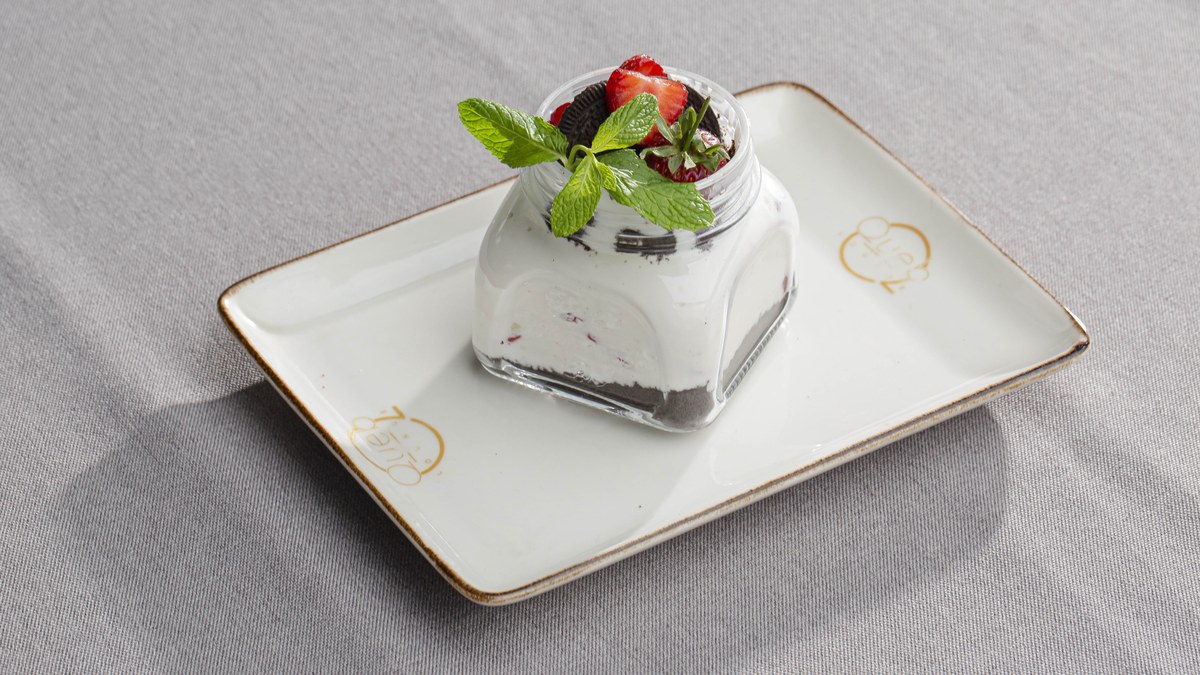
San Sebastian Cheesecake — the burnt Basque cheesecake — has been the most ordered dessert in Istanbul for several years now, and for good reason: caramelised on top, almost liquid in the centre, and far less sweet than a New York-style cheesecake. Lotus Cheesecake is the caramelised-biscuit version for guests who want something sweeter.
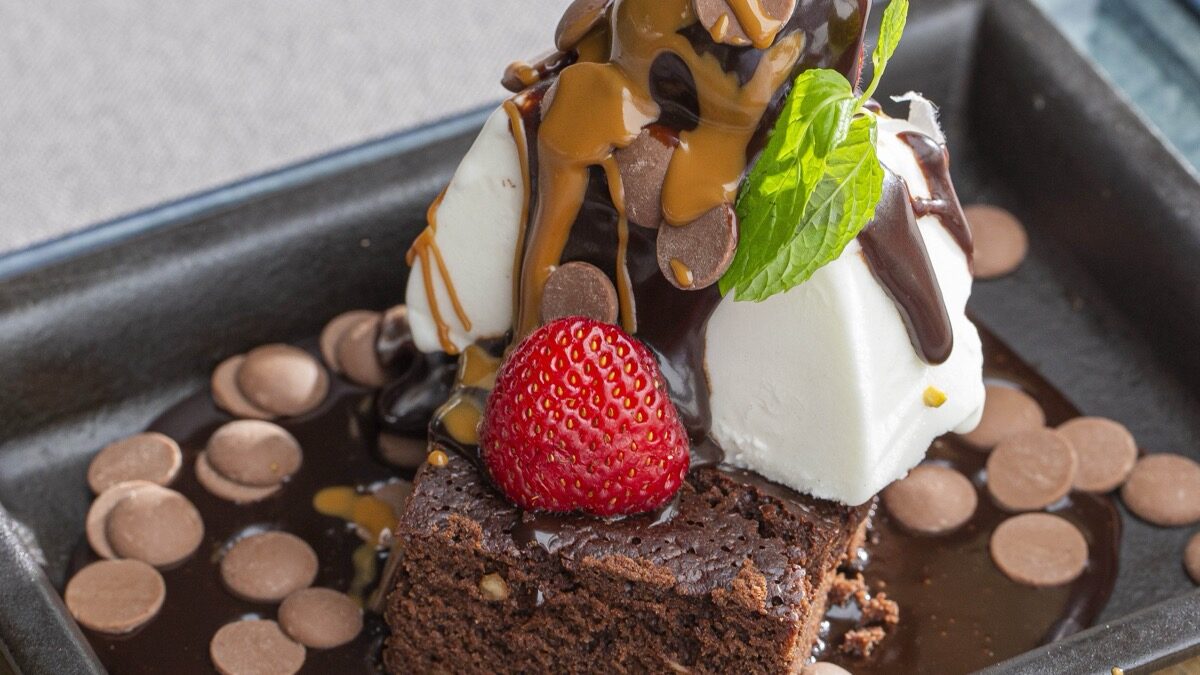
Chocolate Soufflé arrives warm with a scoop of ice cream and a molten centre. The Chocolate Bomb is the table’s photograph: a chocolate sphere that collapses when hot sauce is poured over it. Devils is the brownie-based plate with ice cream and chocolate for guests who simply want chocolate and nothing else.
For lighter finishes there is Fried Ice Cream, Mix Ice Cream, and the Seasonal Fruit Platter for two, which is what most local tables order in high summer when nobody wants anything warm.
What to Drink With Dessert
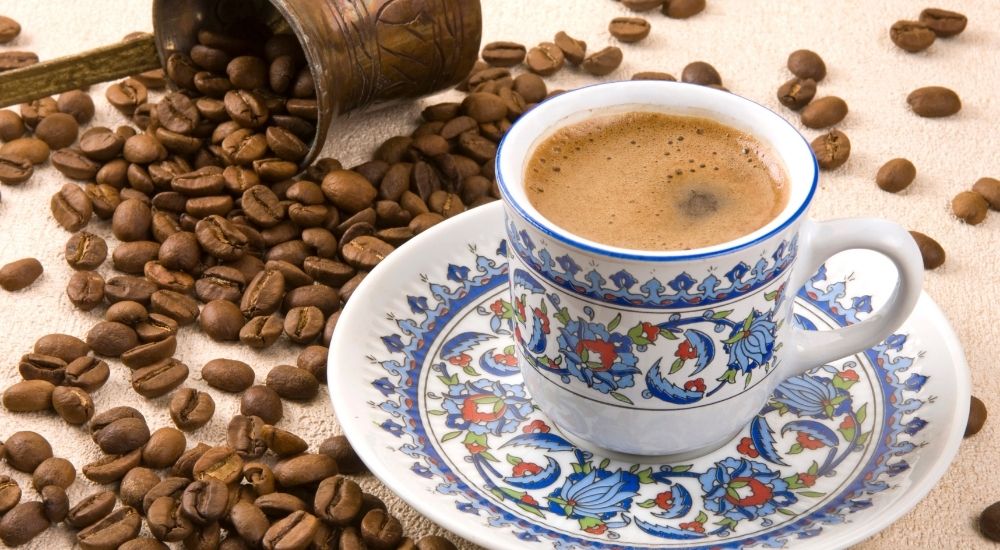
Turkish coffee is the classic partner, and the pairing is structural rather than sentimental: the coffee is unsweetened or barely sweetened, served in a small cup, and its bitterness cuts straight through syrup. Order it sade (no sugar) if you are having baklava or künefe — the dessert is already carrying all the sugar the table needs.
Turkish tea is the everyday alternative and the more common one. It arrives in a tulip-shaped glass, it is drunk hot and unsweetened or with one cube, and it is the reason a Turkish dinner table stays occupied long after the food is finished. Nobody rushes a glass of tea.
For guests who want something colder, a scoop of ice cream on the side of the pastry does the same job. What does not work well is a heavy dessert wine; Turkish desserts are sweet enough on their own and the two compete rather than complement.
When and How to Order Dessert on the Terrace
Timing is worth thinking about. Order dessert about twenty minutes after the main course is cleared rather than immediately, and order coffee at the same time so both arrive together. Künefe should be the last thing ordered and the first thing eaten.
Share rather than order individually. Turkish dessert portions are built for a table, and two or three plates between four people, with extra forks, is both the local habit and the more enjoyable version. If you cannot decide, the mixed platter removes the decision entirely.
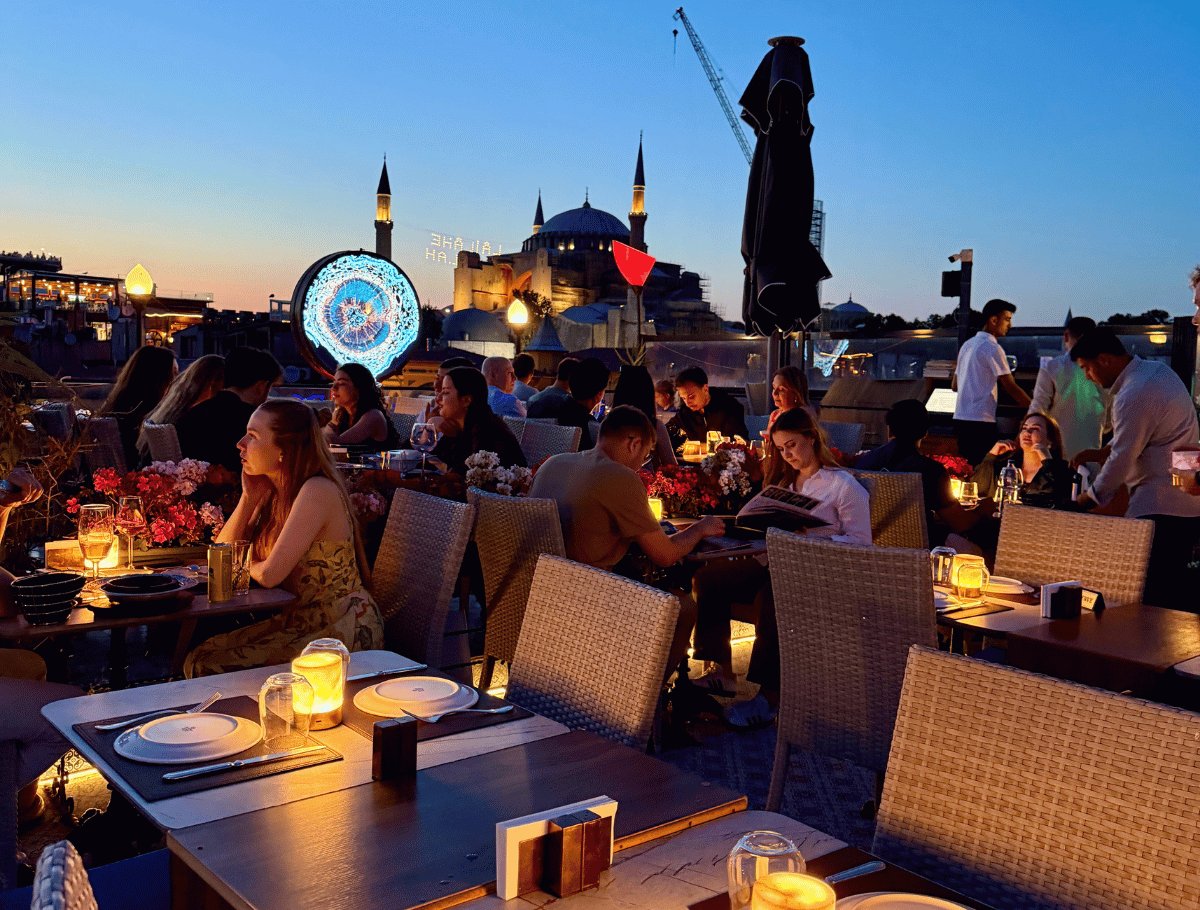
The terrace itself changes the course. By the time dessert arrives the sun has usually gone, the Blue Mosque and Hagia Sophia are lit, and the temperature on the rooftop has dropped enough that a hot dessert makes sense even in August. This is the part of the evening most of our guests stay longest for, and it is why we suggest booking a table that faces the domes — our guide to the best rooftop restaurants near Hagia Sophia explains what to ask for when you reserve.
Frequently Asked Questions About Turkish Dessert
Which Turkish dessert should a first-time visitor order? Künefe, without much hesitation. It is the one that exists nowhere else in quite the same form, and the hot-cheese-and-syrup combination is the clearest example of how Turkish dessert thinking differs from European.
Is künefe really made with cheese? Yes — fresh unsalted cheese, melted inside the pastry. It is savoury rather than sharp, and it is what keeps the dessert from being cloying.
Are Turkish desserts vegetarian? The ones on our menu are. Baklava, katmer, künefe, the cheesecakes, the soufflé and the ice creams contain no meat products; baklava is made with butter rather than any animal fat beyond dairy.
Is there a dessert that is not too sweet? Katmer and San Sebastian cheesecake are the two we recommend most often for that request, followed by the seasonal fruit platter.
Can we come only for dessert and coffee? Yes. Plenty of guests come up after dinner elsewhere in Sultanahmet for dessert and Turkish coffee with the view. Our guide to what to eat in Sultanahmet covers how it fits into a longer evening in the neighbourhood.
Ending the Evening Above Sultanahmet
Dessert in Turkey is not the polite end of a meal; it is the reason people stay at the table. It has its own logic — hot instead of cold, cheese instead of chocolate, syrup balanced by bitterness — and once that logic makes sense, the rest of the menu does too.
On a rooftop in Sultanahmet, with the minarets lit and a small cup of coffee in front of you, ordering a plate of künefe and three forks is the most reliable way to make an evening last another hour. It is what we would order, and it is what we suggest to anyone asking how to finish a dinner in the historic peninsula properly.
Recent posts


