What Is a Turkish Casserole? A Winter Guide to Güveç at Queb Rooftop
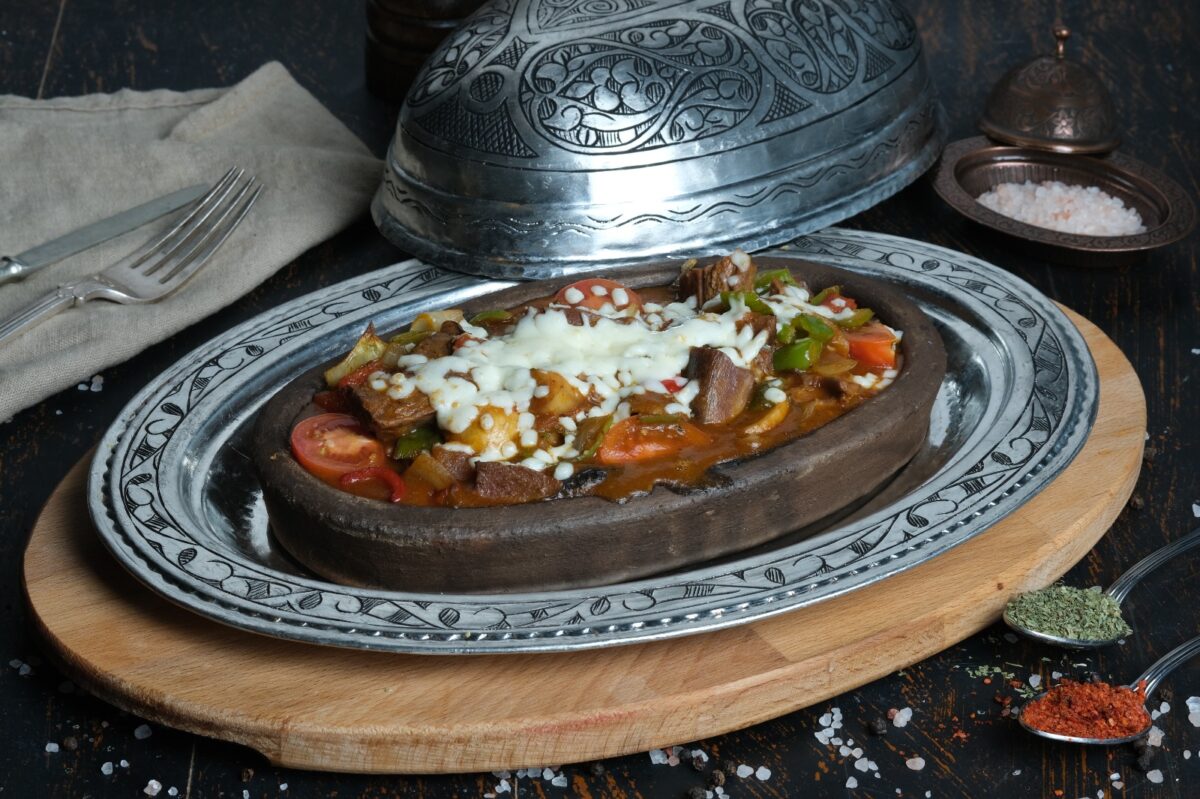
A Turkish casserole, or güveç, is meat, seafood or vegetables cooked slowly in an earthenware dish and served in that same dish, usually still bubbling when it reaches the table. The word names the clay pot as much as the food inside it, which is why a lamb stew, a pan of garlic shrimp and a bake of roasted aubergine can all be called güveç. At Queb Rooftop in Sultanahmet, several starters and main courses arrive this way, each on a metal tray under a domed cover.
Winter is when these dishes make the most sense. A thick clay pot holds its heat long after it leaves the oven, so the sauce keeps simmering at the table and the last spoonful is almost as warm as the first. Below you will find how güveç works, which casseroles are on our menu, how to choose between them and what to expect if you book a table on a cold November or December evening.
What Makes a Dish a Güveç?
The defining feature is the vessel. A güveç is a heavy earthenware dish that goes into a hot oven with the food already inside it. Clay heats up slowly and evenly, so the ingredients cook gently from all sides instead of catching on the bottom. Once the dish comes out, the same thick walls keep it hot for a long time.
Most Turkish casseroles follow a similar pattern. Meat or seafood is sautéed with onion and garlic, then peppers, tomatoes and mushrooms go in, and the dish finishes in the oven, sometimes under a layer of cheese. The result sits somewhere between a stew and a gratin, with a thick sauce underneath and a browned top. In our kitchen the pot is then set on a metal tray with a domed lid, which keeps it hot on the way to your table.
Güveç, sac tava and testi kebab
Three dish names often confuse visitors, and all three appear on our menu. Güveç is cooked and served in an earthenware dish. Sac tava takes its name from the sac, a wide metal pan, and on our menu it is pieces of beef with onion, garlic, tomato and green pepper, served with rice and fries. Testi kebab is cooked in a sealed clay jug, a style closely linked with Cappadocia, and ours is made for two with chicken or lamb, sautéed onion, pepper, tomato, garlic and mushroom, with rice on the side.
If you want the classic clay-pot experience, order from the casseroles described below. If you are a table of two and like a bit of theatre, ask about the testi kebab when you sit down, and check how long it will take that evening.
Meat and Chicken Casseroles

The meat casseroles are the core of the güveç family, and each one has its own character. Here is how the four on our menu compare:
- Lamb or Beef Casserole: cubed meat sautéed with garlic, coloured peppers, mushrooms and onions, then finished with cheese. You choose lamb or beef when you order.
- Lamb Sultan: lamb baked with tomatoes, peppers, fresh spices and vegetables, served in a casserole with rice and a bordelaise sauce. It carries the chef’s recommendation.
- Musakka: beef cubes sautéed with aubergine, onion, garlic and pepper, served with cheese. It has more vegetables and a little less sauce.
- Chicken Casserole: chicken pieces with onion, garlic, pepper, mushroom, tomato and cheddar.
For a first güveç, the lamb or beef version is the most traditional choice. Lamb gives a deeper, richer flavour, while beef is leaner and milder. The Lamb Sultan suits guests who want a complete plate, since the rice comes with it. Chicken casserole is the easy pick for children or anyone who prefers a gentle taste, and it goes well with a fresh salad such as the Greek salad.
How to eat from a hot clay pot
Give the dish a minute before the first bite. The clay stays very hot, so leave the pot on its tray and serve yourself with a spoon instead of lifting it. The best part is often at the edges, where the sauce thickens and caramelises against the clay, so scrape those corners before the waiter takes the pot away.
Seafood in Earthenware

Seafood takes well to the clay pot because it needs gentle heat and a sauce to keep it moist. The Mixed Seafood Casserole combines pieces of fish, calamari, shrimp and octopus with mushroom, onion, garlic, herbs and spices, cooked in the oven and served in an earthenware dish. It works as a main course for one, or as a shared dish for two people who have already ordered a few starters.
Octopus fans have two options. The Octopus Casserole is sautéed with peppers, mushrooms, tomatoes and garlic, while Octopus in Butter, listed among the starters, is cooked with special spices and served in a hot casserole. The Stuffed Squid comes with sautéed spinach, mixed seafood, cheese and a saffron sauce, and it also reaches the table in a clay dish. If you are curious about the rest of our fish and shellfish, our story on seafood with a view of the Bosphorus covers the grilled options too.
Small Casseroles to Share as Starters
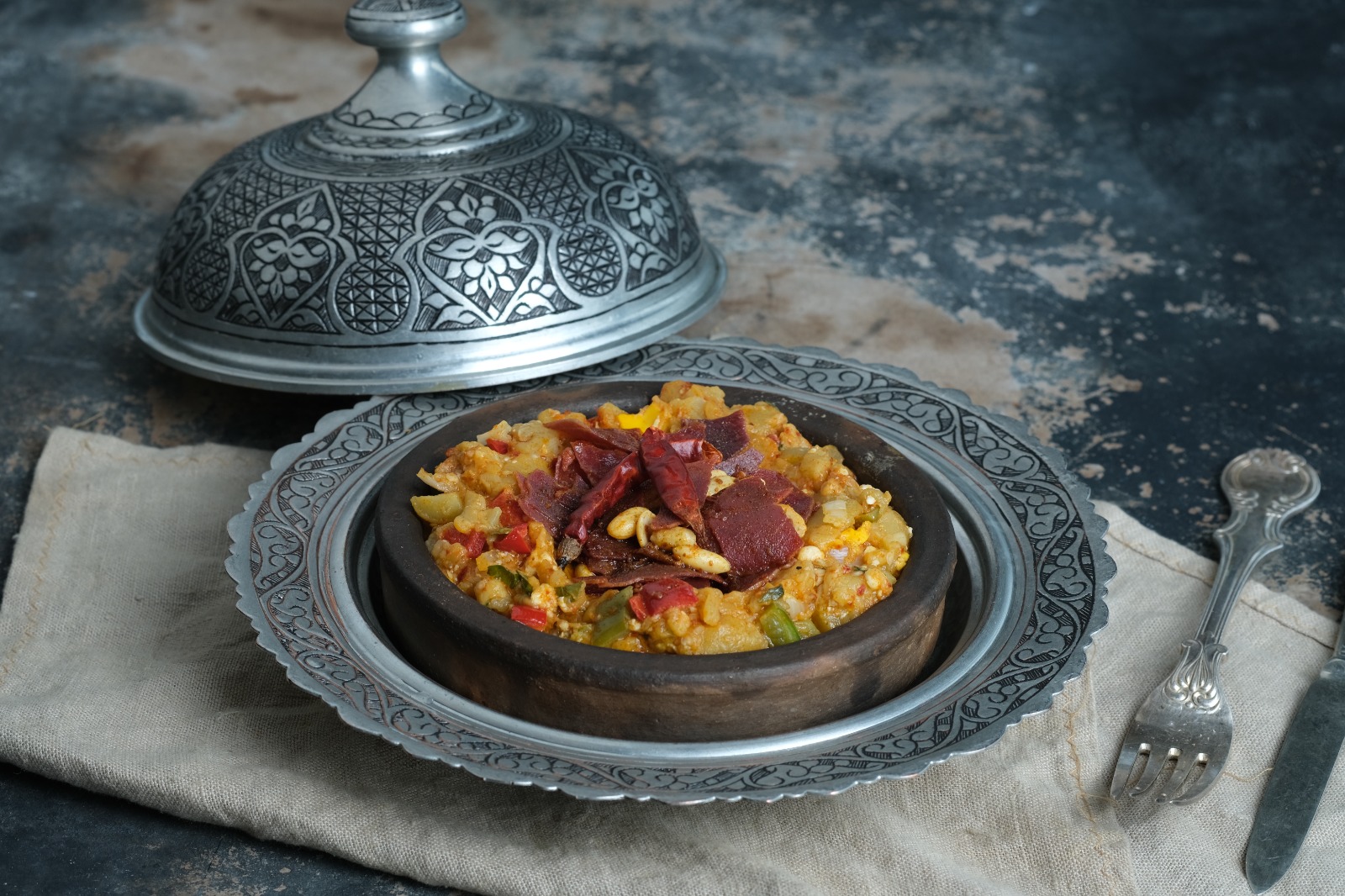
Not every güveç has to be a main course. Several hot starters are served in small clay pots, and two or three of them make a good shared table before the mains arrive. They are also a way to try the clay-pot style without committing to a large portion.
- Shrimp in Garlic: shrimp cooked with butter, garlic, thyme and chilli pepper, marked on the menu as highly recommended.
- Garlic Mushroom: a mushroom casserole with yellow cheese, sautéed in butter.
- Yandım Hacer: roasted aubergine with walnuts, cheddar cheese, pastrami and hot spices.
- Hummus with Pastrami: chickpea paste with garlic, cumin, black pepper, tahini and olive oil, topped with Turkish pastırma.
Yandım Hacer is a playful Turkish expression, roughly “Hacer, I’m on fire”, and with its hot spices the name feels fair. If you want something cold next to these hot pots, add one or two cold mezes such as haydari or muhammara. Our guide to the meze table explains how to mix hot and cold plates.
A Vegetarian Casserole for Meat-Free Tables
Vegetarian guests do not have to sit out the güveç tradition. The Vegetarian Casserole is made with courgette, aubergine, green and red pepper, mushroom, tomato, onion and garlic in a tomato sauce. It is a full main course, and it is also one of the main-course choices on three of our four set group menus, which makes it easy for mixed groups to order together.
Because the vegetables cook slowly in their own juices, the dish tastes fuller than its short ingredient list suggests. If you follow a vegan diet, ask your waiter to confirm the preparation, since details such as butter or cheese can change. Our vegetarian menu guide lists the other meat-free dishes, including the gluten-free vegan penne.
How to Choose the Right Casserole
With this many clay-pot dishes on one menu, a few questions narrow the choice quickly. Think about how hungry you are, who you are sharing with and how much heat you enjoy.
- Very hungry: Lamb Sultan, because it comes with rice.
- Sharing between two: Mixed Seafood Casserole, or the testi kebab, which is made for two.
- Mild flavours: Chicken Casserole or Vegetarian Casserole.
- Spice lovers: Yandım Hacer as a starter, then any meat casserole.
- A lighter dinner: two small starters such as Shrimp in Garlic and Garlic Mushroom, with a salad.
A balanced order for two might be one cold meze, the shrimp in garlic to share, then a lamb casserole and a mixed seafood casserole, with plates passed across the table. That way you taste meat, seafood and vegetables from the same oven. For dessert, something cold makes a nice contrast after a hot pot, and the dessert menu has ice cream next to warm katmer and künefe.
Why Güveç Suits a Winter Evening in Sultanahmet
Istanbul winters tend to be damp and windy rather than freezing, and after a day of walking between Hagia Sophia, the Blue Mosque and the Grand Bazaar, a hot dish feels earned. A clay pot gives you exactly that. It is the same instinct that turns the city’s street food towards salep, boza and roasted chestnuts at this time of year, as we describe in our piece on the famous winter tastes of Istanbul.
Queb Rooftop has an indoor dining area as well as an open terrace, so on colder nights you can eat inside and still step out for the view over the old city and the sea. We are open daily from 10:00 to 01:00, and the kitchen takes orders until 23:30. On weekends and around the New Year period it is worth reserving a table in advance, especially for larger groups.
Frequently Asked Questions
Is güveç the same as a stew?
Not exactly. A stew is usually cooked in a pot on the stove, while a güveç is finished in the oven in an earthenware dish and served in it. The oven gives the top a browned layer that a stew does not have.
Is Turkish casserole spicy?
Most Turkish casseroles are mild and get their flavour from garlic, peppers and tomato rather than chilli. On our menu the exceptions are Yandım Hacer, made with hot spices, and Shrimp in Garlic, which includes chilli pepper. If you are sensitive to heat, ask whether it can be made milder when you order.
How long does a casserole take to arrive?
A casserole usually takes a little longer than a grilled dish because it finishes in the oven. Timing depends on how busy the kitchen is, so if you have a show or an early tour the next morning, mention it when you order.
Can children eat güveç?
Yes, the milder casseroles suit children well. Chicken Casserole and Vegetarian Casserole are the usual picks; just let the pot cool for a few minutes first, because the clay stays hot.
Do I need a reservation for dinner?
A reservation is not always required, but it is a good idea for evenings, weekends and holidays. You can book through the website, by WhatsApp or by phone.
Recent posts